
COMPLEXITY: How the Leadership Industry Turned Kindergarten Wisdom Into a Paywall
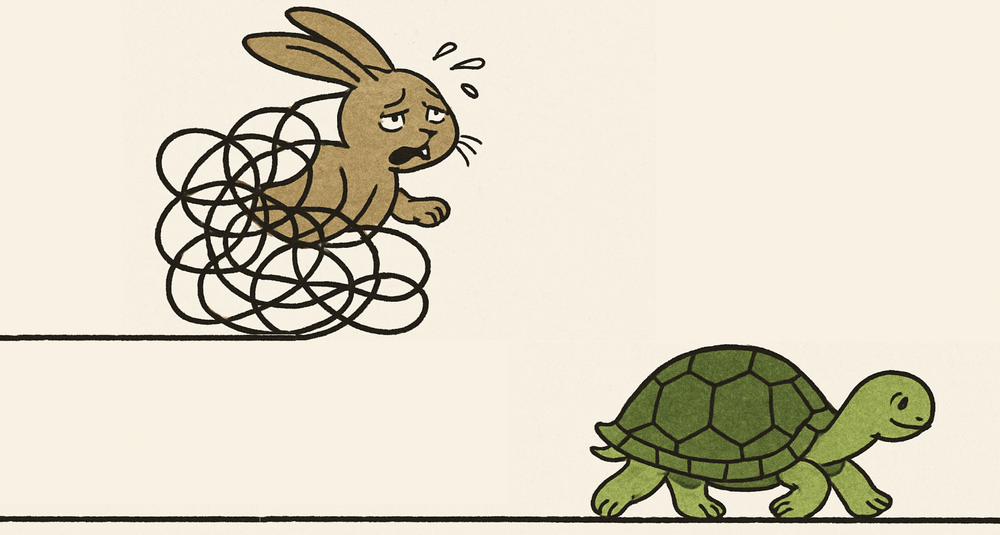
Why “engagement” and a thousand frameworks keep failing—and what to use instead.
Let’s start with the obvious: organizations spend eye‑watering sums every year trying to teach leaders how to “engage” (shudder) the workforce. The budgets are real. The belief is sincere. And yet, after decades of programs, toolkits, offsites, dashboards and “journeys”, we still end up with mediocre cultures and flat performance. In our last piece, Engagement: The $2 Trillion Illusion, we showed why: engagement is a lag measure worshipped as a management system, an expensive myth that delivers more consulting invoices than results.
Engagement is stuck. ROI is missing. The industry, however, is thriving.
Complexity sells.
When an idea starts to wobble, the market rarely simplifies it. It adds layers. A dozen new models appear. Each is branded, color‑coded and “science‑backed,” with proprietary lexicons, matrices and a certification ladder that just happens to create more revenue. The pitch is always the same: Your culture is complex; therefore you need our complex solution.
Translation: pay a toll to enter the high‑priesthood of leadership.
Do I believe many of these tools contain insight? Absolutely. Do I believe their complexity often serves their authors more than their users? Also yes. If your model requires a two‑day certification before a frontline manager can use it Tuesday morning with the team, it’s not a tool; it’s a moat.
Meanwhile, managers are asking a simple question:
“I have this challenge with my team. What can I do today and how does that help us hit this quarter’s goals?”
Most frameworks can’t answer that in plain language. They talk about people instead of helping leaders with people.
Exhibit A: Survey questions that aren’t actionable.
Take the famous question 10 from Gallup's engagement survey: “I have a best friend at work.” For years leaders have been asked to manage to this. But what, precisely, is a manager supposed to do with it? Can we define “best”? Should we mandate lunch buddies?
Even fans admit it’s a lightning rod; critics argue it’s vague, culturally biased and not within a leader’s sphere of control. Worse, it offers zero guidance on what behavior to change tomorrow morning.
If you want something actually coachable, why not ask about trust and working relationships—variables that leaders can influence directly.
Exhibit B: Scales that guide nothing.
A five‑point Likert scale from “Strongly Disagree” to “Strongly Agree” can measure a sentiment but rarely prescribes an action. It doesn’t say do more of X, less of Y, or do it sooner. It simply reports a mood. Leaders are left staring at numbers and feeling stressed. Just what do you do with: Your team's average answer to question 10 is Neutral (3.2/5).
Why do we tolerate this?
Complexity creates the illusion of control. It flatters our intellect. It makes the work look serious. And there’s an entire ecosystem—train‑the‑trainer, certifications, enterprise licensing, entire careers—built on making leadership look harder than it is.
Here’s the uncomfortable truth:
Share. Play fair. Don’t hit. Say sorry when you should. Wash your hands. Look both ways. Hold hands and stick together.
Translate those into the workplace and you get clarity, respect, inclusion, safety, accountability. No guru required.
Simple ≠ simplistic. Simple = usable.
Operating a team is not rocket science; it’s rhythm, repetition and repair. The few behaviors that matter most—clear goals, psychological safety, collaborative norms, fair accountability—explain most of the lift. In our previous article we argued that engagement is, at best, the smoke, not the fire. The fire is the team's trust and psychological safety: these are the lead indicators that actually move performance.
Measure those, support those and performance follows.
The other reason complexity fails: cost + inaccessibility.
Even if a heavyweight program works, most leaders will never see it. Too expensive. Too theoretical. Too time‑consuming. The result? The majority of managers are promoted and left to improvise. We romanticize it as “learning on the job.” In reality it’s trial‑and‑error with human beings. That’s not a strategy; that’s a risk profile.
Let’s call the current paradigm what it is: the Complexity Industrial Complex.
It thrives on opaque models, lagging metrics and the promise that if you just buy one more tool, engagement will pop by a point. But as we showed, a quarter‑century of “engagement” later, the needle hasn’t moved—and the bill keeps rising.
The practical alternative: Make leadership kindergarten‑simple again
This is where we’re taking a stand with the Circular Leader approach. The thesis is straightforward:
Here’s how:
- Write questions in plain English.
No psychobabble. No proprietary jargon. If a leader can’t read a question and know what it means, it’s the wrong question. - Focus on trust and psychological safety.
These are the early signals—not the rear‑view mirror—that predict innovation, retention, customer outcomes and productivity. When these signals rise, teams speak up sooner, learn faster, execute better and stay longer. That’s the lever engagement tried (and failed) to be. - Tie questions directly to performance—not to vibes.
Every item is framed so a manager can connect it to output: better customer satisfaction, higher sales close rates, improved efficiencies, more innovation. You don’t need a high priest to interpret it. - Answer questions on a temporal scale (Never → Always).
Time is the vector of behavior. Asking how often something happens implicitly suggests the intervention: how do we help the team do this more often? That turns measurement into motion. - Ground questions in the Four Leadership Fundamentals that every manager already knows.
- GOALS: Be crystal clear about where we're going and what matters now.
- INDIVIDUALS: Help each person feel valued and heard.
- TEAM DYNAMICS: Build norms that are collaborative and welcoming.
- ACCOUNTABILITY: Embed fair follow‑through into daily practice.
Because every question maps explicitly to one of these fundamentals, leaders don’t need a week of training to use them. They integrate them into their daily routines—one‑on‑ones, stand‑ups, planning, retros, huddles—immediately.
What this does for a manager
It replaces anxiety with a working cadence: measure the few things that matter, talk about them openly, adjust quickly, repeat. It shrinks the gap between data and action to the length of a conversation. It keeps the focus on conditions (which leaders control) rather than outcomes (which appear later). It’s kindergarten logic applied to complex systems: create a safe, clear, fair environment and people do great work.
What this does for an organization
It lowers the barrier to leadership improvement so the majority of managers—not just the favored few—can participate. It reduces cost while increasing practicality. And it makes leadership feel doable instead of mystical: leadership is not a secret society.
If you loved the last article, this is the sequel you were waiting for
Engagement is the world’s most expensive lagging indicator. But the cure to it isn’t a more complex engagement model, it's a simpler model that we all get as soon as we see it.
Shift attention to the leading indicators of performance and make them ridiculously usable. That’s what we built the Circular Leader app to do: return leaders to the simplicity and common sense of Kindergarten—so teams can actually do the work, together, better, this week.
PS: About that “best friend at work” question? If you want to help a leader today, ask people a better question: “Can everyone on your team say they can speak up, ask for help and be taken seriously?” That’s actionable. That’s performance‑relevant. And it doesn’t require a guru to explain it.
Our FREE app, Circular Leader, is available for iPhones and iPads on the AppStore now.
Receive new posts straight to your inbox.
No spam ever. Unsubscribe anytime, no questions asked.